Connecting Climate Minds
SustyVibes is on a mission to make sure the voices of young people from the Global South are heard loud and clear when it comes to the mental health impacts of climate change. Through The Ecoanxiety Africa Project (TEAP), we are part of the Lived Experience Working Group (LEWG) for an ambitious global initiative called Connecting Climate Minds (CCM).
This groundbreaking project, led by Imperial College London and funded by The Wellcome Trust, aims to explore the intersection of climate change and mental health. The ultimate goal is to develop an inclusive, actionable research agenda that brings people worldwide together on this critical issue.
Communities in the Global South get left out of these conversations. Hence, our core mission within the Connecting Climate Minds project is to support research that includes the lived experience of young people and communities in the Global South who are often neglected in these conversations.
To make this happen, we hosted two youth dialogues, creating safe spaces for young people to express their concerns about the impact of climate change on their mental health. These dialogues also acted as a platform where young people in the Global South could share their ideas and aspirations and be confident that they would be represented in the CCM research and action agenda.
Additionally, we aimed to rejuvenate youth participation in research and policy processes historically known not to be youth-friendly. By ensuring the Global South’s perspectives are included in the CCM agenda, SustyVibes is paving the way for mental health solutions that truly serve all people affected by our changing climate.
Youth Dialogues
Harmony Horizons (Global virtual dialogue)
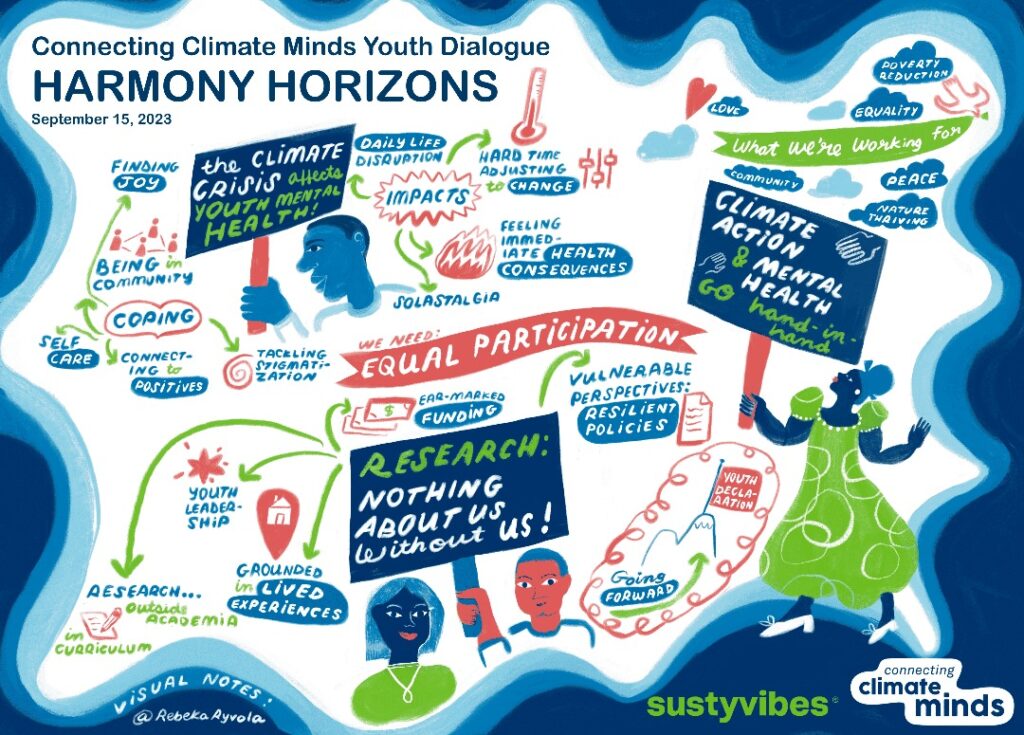
Harmony Horizon provided a powerful space to explore youth priorities on climate change and mental health research. The dialogue was curated for and by youth and was packed with insightful dialogues, icebreakers, a visual storyboard and opportunities to listen to each other. The core priority areas included youth participation in research, coping mechanisms and lived experiences of climate change and mental health issues.
Rising Resilience (Regional Pop-up dialogues)
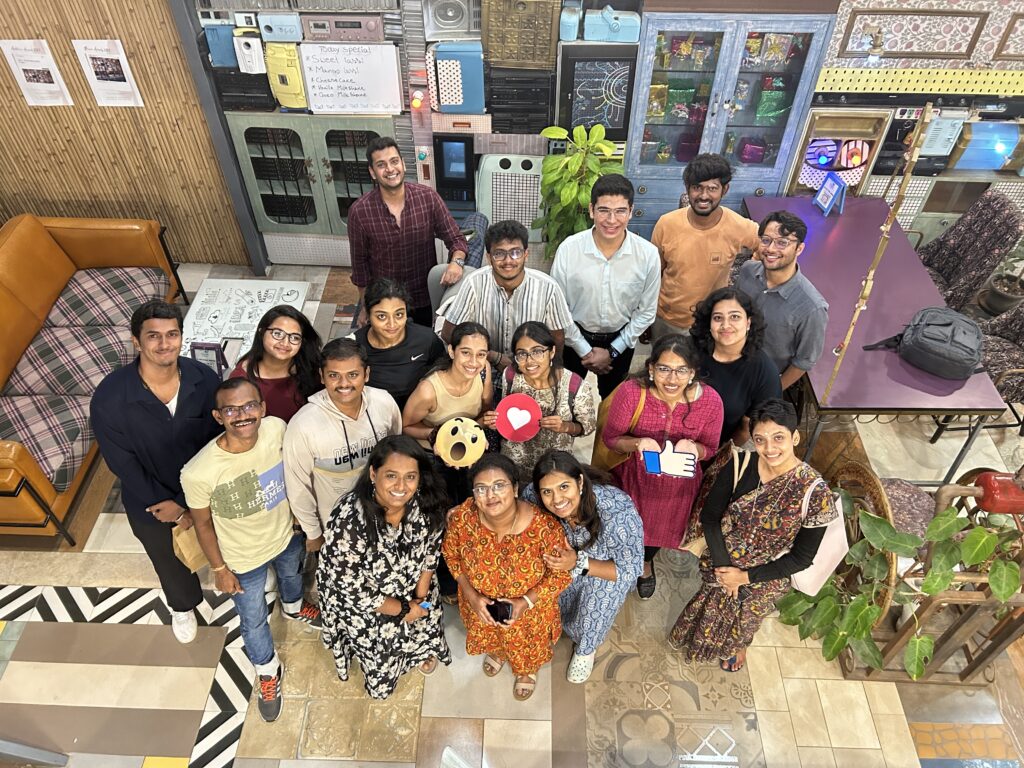
Rising Resilience regional dialogues were held in Port Harcourt, Nigeria and Bangalore, India. These dialogues built on the insights and lessons from the global virtual dialogue to inspire participants to explore local contextualised resilient ideas, initiatives, and actions to address the nuanced mental health impacts of climate change. During the session, participants engaged in guided conversations, creative games and storytelling to facilitate meaningful connections.
These dialogues informed the development of the Global Youth Research and Action Agenda on Climate Change and Mental Health.
Other Lived Experience Work
Together with the Lived Experience Working Group (LEWG) team, we inspired a lived experience approach in the project process by developing a Decolonial Approach & Power Mapping Webinar for the global team. We supported dialogues with Farmers, Fisher people and Indigenous communities to gather their lived experiences to inform the global research agenda. Finally, we co-created key lived experience resources, including the Lived Experience Engagement Toolkit, Youth Engagement in Dialogue Terms of Reference, and Lived Experience Story Gathering and Telling Terms of Reference.
Global Event
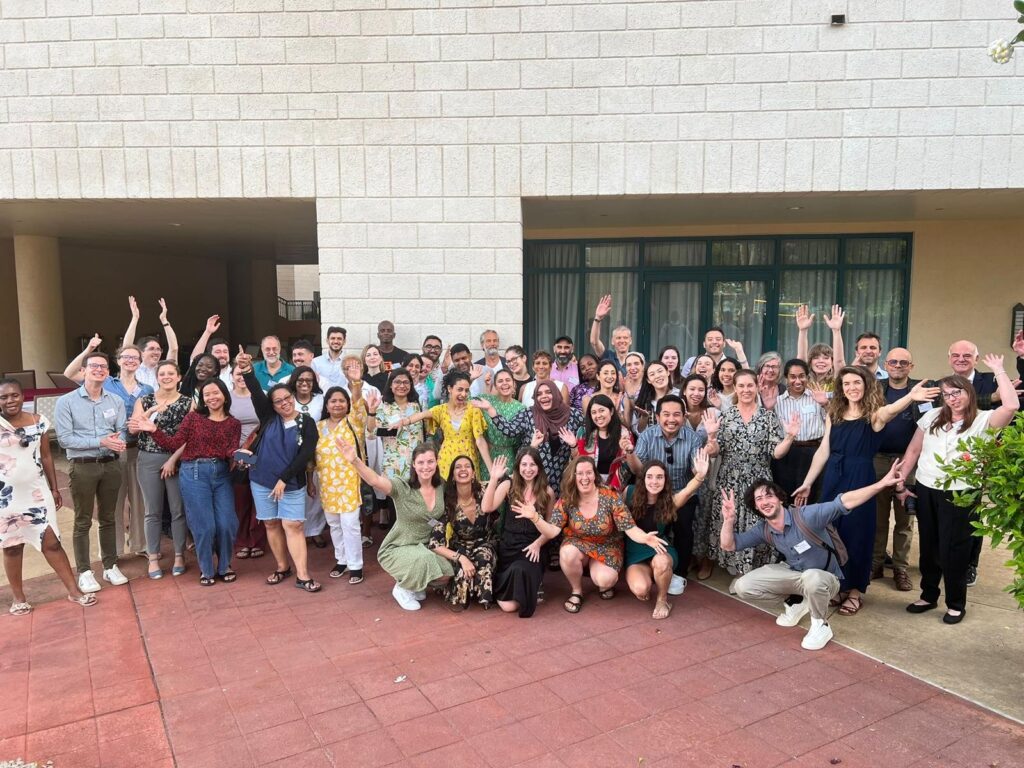
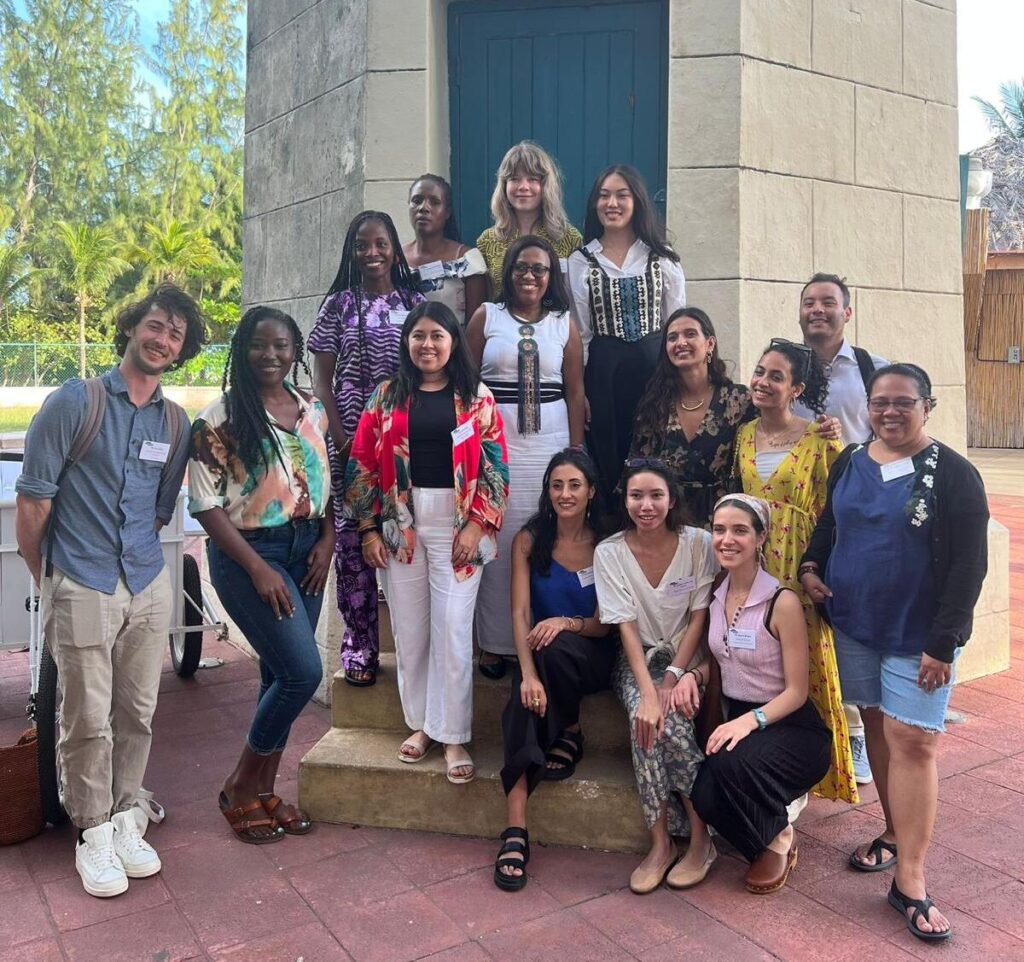
From 19-21 March 2024, our TEAP project manager, Ayomide Olude, represented SustyVibes at the global Connecting Climate Minds stakeholders conference in Barbados. This event united project stakeholders to finalise the Global Research and Action Agenda on Climate Change and Mental Health.
As part of a vibrant global community of practice, we worked collaboratively to ensure the lived experiences of young people were included in shaping the final agenda. By sharing insights and advocating for youth perspectives, we contributed to a more inclusive and impactful global strategy addressing the intersection of climate change and mental health.
Visit the CCM Global Online Hub to learn more about the project.